Cellular Respiration
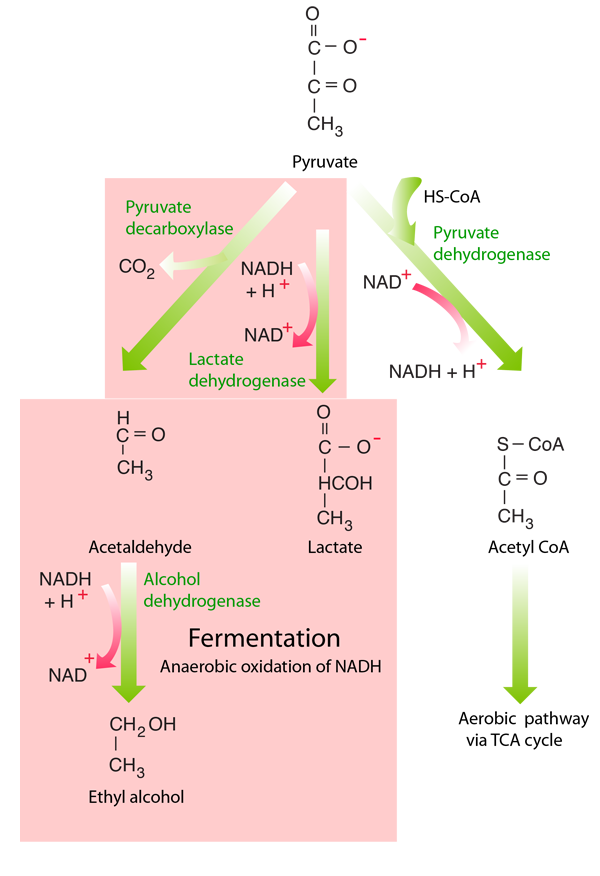
The term cellular respiration refers to the biochemical pathway by which cells release energy from the chemical bonds of food molecules and provide that energy for the essential processes of life. All living cells must carry out cellular respiration. It can be aerobic respiration in the presence of oxygen or anaerobic respiration. Prokaryotic cells carry out cellular respiration within the cytoplasm or on the inner surfaces of the cells. More emphasis here will be placed on eukaryotic cells where the mitochondria are the site of most of the reactions. The energy currency of these cells is ATP, and one way to view the outcome of cellular respiration is as a production process for ATP.

The graphic below can serve as a reminder of some of the processes involved in cellular respiration.
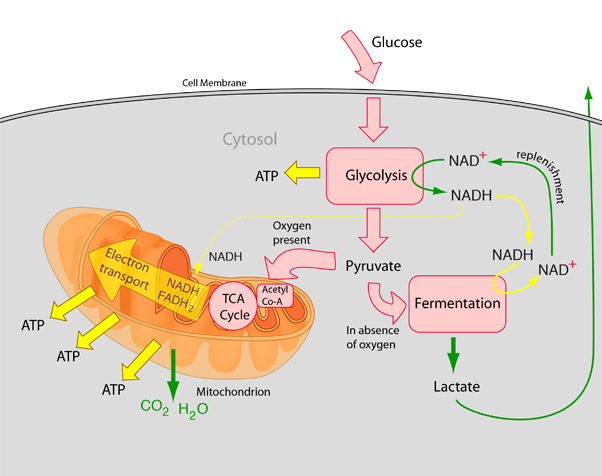
These are active graphics: click anywhere.
Cellular respiration produces CO2 as a metabolic waste. This CO2 binds with water to form carbonic acid, helping to maintain the blood's pH. Since too much CO2 would lower the blood's pH too much, the removal of the excess CO2 must be accomplished on an ongoing basis.
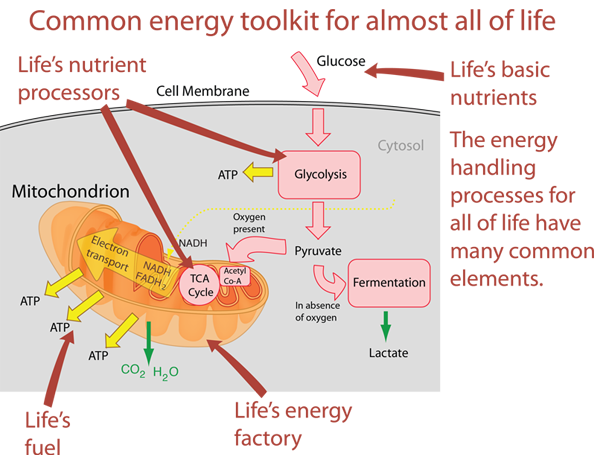
One of the interesting things about cell respiration is that it is part of an essentially universal "toolkit" that characterizes all of life, at least for life involving eukaryotic cells.
| Respiratory System |
Reference
Enger & Ross
Ch 6
Audesirk & Audesirk
Ch 8
Karp
Ch 5
| HyperPhysics***** Biology | R Nave |